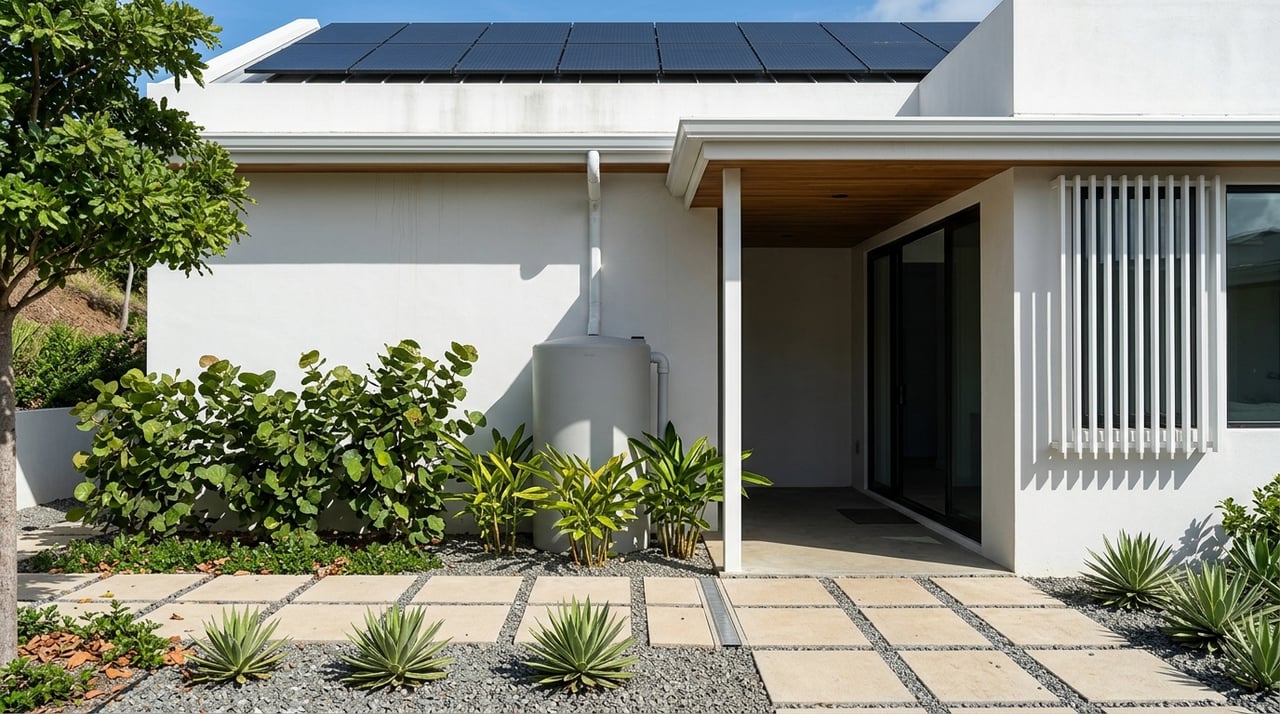
If you are searching for a home on St. John, eco-conscious features are not just nice extras. On this island, they often make daily life easier, more comfortable, and more resilient. From managing water and heat to preparing for power interruptions, the right home features can support smoother island living. Let’s dive in.
Why eco-conscious features matter on St. John
St. John’s climate makes resource-smart design especially practical. The U.S. Virgin Islands has a wet hurricane season from August to November and a dry season the rest of the year, with about 40 percent of annual rainfall arriving in the three wettest months, according to Drought.gov.
That same source notes the islands have no significant perennial surface water and minimal groundwater, which is why many homes rely on rooftop cisterns. Add in tradewind-driven weather patterns and occasional utility interruptions, and it becomes clear why buyers often look beyond finishes and views to see how a home actually functions day to day.
For many buyers, the best island homes blend comfort with practicality. Features like solar power, efficient water systems, shade-focused design, and native landscaping can help reduce operating burden while making a property better suited to St. John’s conditions.
Solar power and backup readiness
On St. John, solar is often as much about resilience as efficiency. Recent WAPA information on the Net Energy Billing program explains that excess solar generation can earn bill credits, while residential systems 10 kWac and under remain under the original net-metering structure.
For larger residential systems, WAPA says systems over 10 kWac transitioned from net metering to Net Energy Billing beginning January 1, 2026. WAPA also states that the NEB credit rate is 75 percent of the LEAC rate, which makes it important to understand how an existing system is set up before you buy.
If you are touring a home with solar, due diligence matters. WAPA also notes that net-metering and NEB agreements do not automatically transfer when a property changes hands, so buyers should verify enrollment status and next steps during the transaction.
Battery storage can also be a meaningful upgrade. In a recent outage notice for the St. Thomas and St. John district, WAPA outlined a long-term strategy that includes more solar projects, battery storage, a more diverse energy mix, and grid modernization. For buyers, that makes solar-plus-storage a practical feature to notice when comparing homes.
What to look for in a solar-equipped home
- Whether the system is grid-tied, paired with battery storage, or both
- The size of the system and whether it falls under net metering or NEB
- Documentation related to WAPA enrollment and transfer requirements
- The general condition and age of the equipment
Cisterns and water-smart living
Water efficiency is a central part of island homeownership. According to Drought.gov’s U.S. Virgin Islands overview, many residents depend on cisterns that collect rooftop runoff, and some households purchase reverse-osmosis water when other sources are unavailable.
That is why a home’s water setup deserves close attention. On St. John, a cistern is not just a hidden utility feature. It is often a core part of how the property operates.
The USVI code requires cisterns for many dwellings unless the property has verified access to potable water service. DPNR guidance states that minimum usable capacity is 10 gallons per square foot of roof area for one-story buildings and 15 gallons per square foot for buildings with two or more stories.
Beyond size, condition matters. DPNR emphasizes practical design and maintenance items such as watertight construction, mosquito- and rodent-proofing, overflow protection, first-flush diverters, screens, and accessible inspection points.
Why efficient fixtures matter
Water-saving fixtures are especially useful in a cistern-reliant home. EPA WaterSense says labeled products use at least 20 percent less water while performing as well as or better than standard models.
That can translate into real everyday value on St. John. Lower water use means less demand on cistern reserves during dry stretches and less stress when managing a home from off-island.
EPA also notes that WaterSense toilets use 1.28 gallons per flush or less and can reduce toilet water use by 20 to 60 percent. WaterSense faucets and aerators are about 30 percent more efficient than standard faucets, and WaterSense irrigation controllers can save up to 15,000 gallons annually.
Water features buyers should notice
- Cistern size and visible maintenance condition
- Screens, overflow details, and access for inspection
- Low-flow toilets and faucet aerators
- Efficient irrigation controls, if the property is landscaped
- Plumbing features that support efficient hot-water delivery
Passive cooling and shade design
A home that works with St. John’s climate can feel more comfortable without depending as heavily on mechanical cooling. The National Park Service notes that tradewinds shape weather in the Virgin Islands, with stronger winds and less rain in winter and more rain and lighter winds in summer.
That climate makes passive cooling design especially relevant. The U.S. Department of Energy explains that natural ventilation uses wind and stack effect to cool a home, and coastal homes often use large, operable windows to capture sea breezes.
At the same time, humidity control still matters. DOE cautions that in humid climates, natural ventilation should not be treated as the only cooling strategy because it can contribute to mold and mildew if not managed properly.
The best setups often combine several features. DOE says proper insulation, energy-efficient windows and doors, daylighting, shading, and ventilation can help keep a home cooler with less air conditioning.
St. John-friendly cooling features
On showings, look for design choices that support airflow and reduce heat gain, such as:
- Large operable windows placed to catch breezes
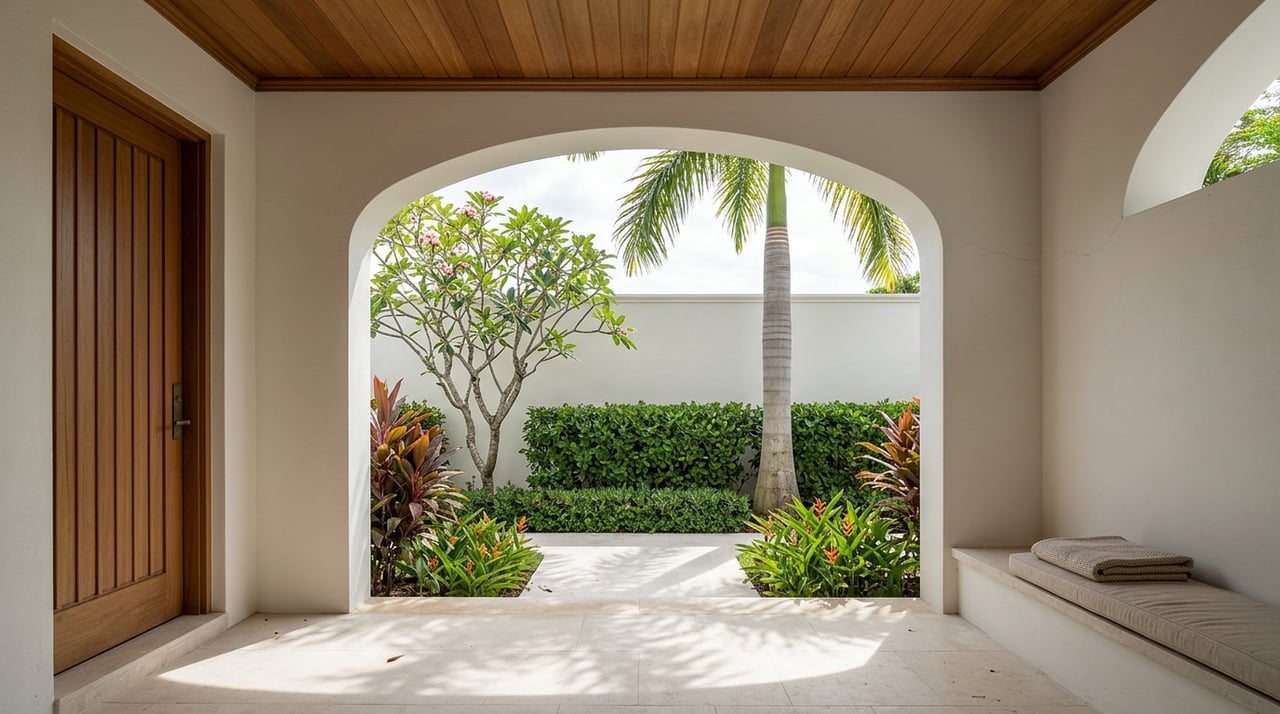
- Covered patios and shaded terraces
- Window and door placement that supports cross-ventilation
- Site orientation that balances views with sun exposure
- Landscaping that helps cool walls, patios, and outdoor living areas
DOE also notes that trees, trellises, shrubs, hedges, and vines can help shade walls, patios, and driveways. On St. John, shade is not only about comfort indoors. It can shape how usable and enjoyable outdoor spaces feel throughout the day.
Native landscaping and erosion control
Landscaping on St. John works best when it fits the island rather than fights it. The National Park Service notes that St. John transitions quickly from moist forest to dry cactus scrubland, and its native plant information highlights species adapted to dry coastal conditions.
That makes native or well-adapted planting a practical choice for many homes. It can help reduce irrigation demand, support site stability, and create a landscape that feels more natural in the local environment.
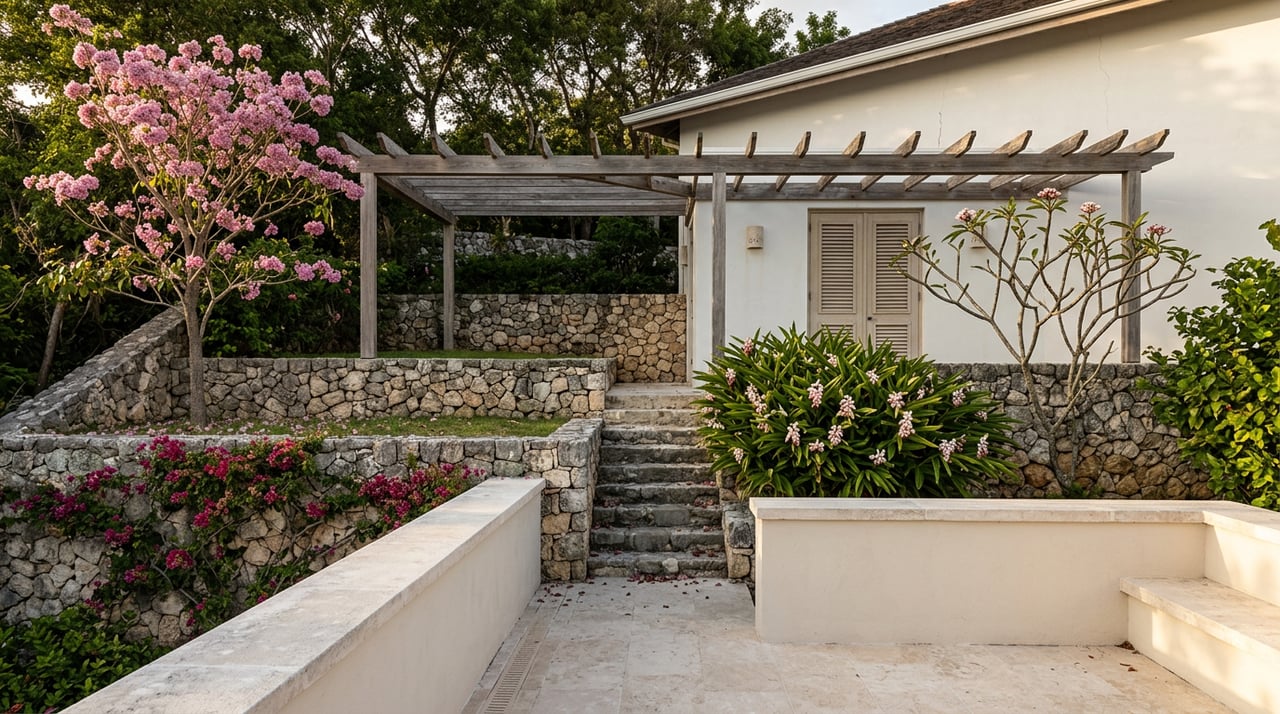
DPNR’s environmental protection guidance notes that local plantings can provide shade, windbreaks, privacy barriers, dust filtering, and wildlife habitat. The same guidance also points to vetiver hedges as one option for slope stabilization.
This can be especially useful for hillside and coastal properties, where drainage and erosion control may affect both maintenance needs and long-term durability. Thoughtful landscaping is not just about appearance. It can be part of how a property handles wind, runoff, and heat.
NPS also warns that nonnative species can damage habitat and contribute to erosion. For buyers, that is another reason to view landscaping as part of responsible property stewardship, not just curb appeal.
How buyers can evaluate these features
If you are comparing real estate listings in Saint John USVI, it helps to look past surface finishes and ask how the home performs. Eco-conscious features often reveal whether a property was designed and maintained with island conditions in mind.
A smart review can include questions like:
- Does the home have solar, and is there battery backup?
- What is the cistern setup, and how is it maintained?
- Are water-saving fixtures already installed?
- How does the house capture breezes and manage sun exposure?
- Is the landscaping adapted to local rainfall, slopes, and soil conditions?
These are not small details. They can affect comfort, upkeep, and your overall ownership experience.
Why these features add practical value
On St. John, eco-conscious design often overlaps with durability and ease of ownership. Features that conserve water, reduce heat gain, and support backup readiness can help lower the day-to-day burden of managing a home in a tropical island setting.
That matters whether you are looking for a full-time residence, a second home, or an investment property. Practical systems can support smoother operations, especially if you plan to spend part of the year off-island or want a property that is easier to manage over time.
When you are ready to explore island properties with features that fit the realities of St. John living, S & S International can help you evaluate listings with a practical, local perspective.
FAQs
What eco-conscious home features matter most on St. John?
- The most relevant features often include solar power with possible battery storage, cistern-aware water systems, efficient plumbing fixtures, passive cooling design, shade planning, and native or well-adapted landscaping.
What should buyers know about cisterns in St. John homes?
- Many homes rely on rooftop runoff collected in cisterns, so buyers should review cistern size, maintenance condition, screening, overflow protection, and inspection access during due diligence.
What should buyers verify about solar systems on St. John?
- Buyers should confirm the system size, whether it is under net metering or Net Energy Billing, and whether any WAPA enrollment or transfer steps are required after closing.
How does passive cooling help in St. John real estate?
- Passive cooling features like operable windows, cross-ventilation, shade, and site orientation can improve comfort and reduce dependence on air conditioning, though humidity control still matters.
Why is native landscaping useful for St. John properties?
- Native or island-appropriate landscaping can reduce irrigation needs, support erosion control, and better match local wind, rainfall, and soil conditions.